
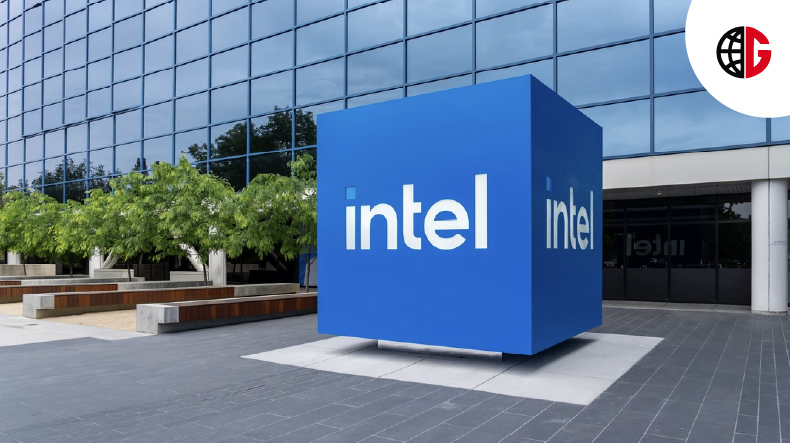
Austin, Texas — In a major development set to reshape the global semiconductor landscape, Intel has announced its participation in the ambitious Terafab chip manufacturing venture alongside Tesla, SpaceX, and xAI. The announcement has already made waves in financial markets, with Intel’s shares climbing approximately 4% following the news.
The Terafab project, unveiled by Tesla CEO Elon Musk last month, represents a bold $25 billion investment aimed at building a next-generation semiconductor fabrication facility in Austin, Texas. The initiative is expected to become one of the most advanced chip manufacturing ecosystems in the United States, reinforcing domestic production capabilities amid growing global demand for high-performance computing.
A Strategic Alliance to Power the Future
Under this collaboration, Intel will play a pivotal role by designing, fabricating, and packaging chips for the Terafab facility. The project is planned for the North Campus of Tesla’s Gigafactory Texas and is expected to produce an unprecedented 1 terawatt of compute power annually—a scale designed to support rapidly evolving sectors such as artificial intelligence, robotics, and space exploration.
The partnership marks a significant milestone in Intel’s ongoing transformation strategy, particularly in strengthening its foundry business. By aligning with Musk-led ventures, Intel positions itself as a key enabler of cutting-edge technologies while offering a robust U.S.-based alternative to overseas semiconductor manufacturing.
Reinforcing Domestic Semiconductor Leadership
The Terafab initiative underscores a broader shift in strategy led by Elon Musk, focusing on securing a reliable and domestic chip supply chain. As geopolitical tensions and supply chain disruptions continue to challenge the global semiconductor industry, the move reflects a growing emphasis on self-reliance and technological sovereignty.
For Intel, this collaboration enhances its competitive positioning against global chipmakers by leveraging advanced manufacturing capabilities within the United States. It also aligns with government-backed efforts to boost domestic semiconductor production and reduce dependence on foreign suppliers.
Market Confidence and Investor Optimism
Following the announcement, investor sentiment toward Intel strengthened significantly, with the company’s stock registering a notable 4% uptick. Analysts view the partnership as a long-term growth catalyst, given the scale of investment and the strategic importance of the sectors it aims to serve.
Industry experts believe that Terafab could redefine the future of chip manufacturing by integrating AI-driven design, advanced fabrication processes, and high-volume production within a single ecosystem.
Outlook
As the Terafab project moves forward, the collaboration between Intel and Musk’s companies is expected to accelerate innovation across multiple industries—from autonomous vehicles and advanced AI systems to next-generation space technologies.
With a projected annual output of 1 terawatt of compute power, the venture signals not just a technological leap, but a strategic reimagining of how and where the world’s most critical chips are manufactured.
About Intel
Intel is a global leader in semiconductor design and manufacturing, driving innovation in computing, data infrastructure, and artificial intelligence technologies.
Read more: “Too Dangerous to Release”: Anthropic Reveals Powerful Claude Mythos AI